The Aura of Luxury: More Than Just a Product
A luxury brand is a special thing. It’s not just about the quality of the leather or the precision of the watch movement. It’s about the story, the heritage, the exclusivity, and the powerful emotional connection it creates with its customers. This intangible value, this aura, is the brand’s most precious asset, and it needs to be fiercely protected.
This guide is the centerpiece of our “Luxury Brands Law” service hub. We’ll take you inside the unique legal world of luxury goods. We’ll talk about the strategies the world’s top brands use to control their image, the ongoing war against fakes, and how to build a legal fortress around your brand in the dynamic markets of Macau, the Greater Bay Area, and the Portuguese-speaking world.
1. The Foundation: A Rock-Solid IP Portfolio
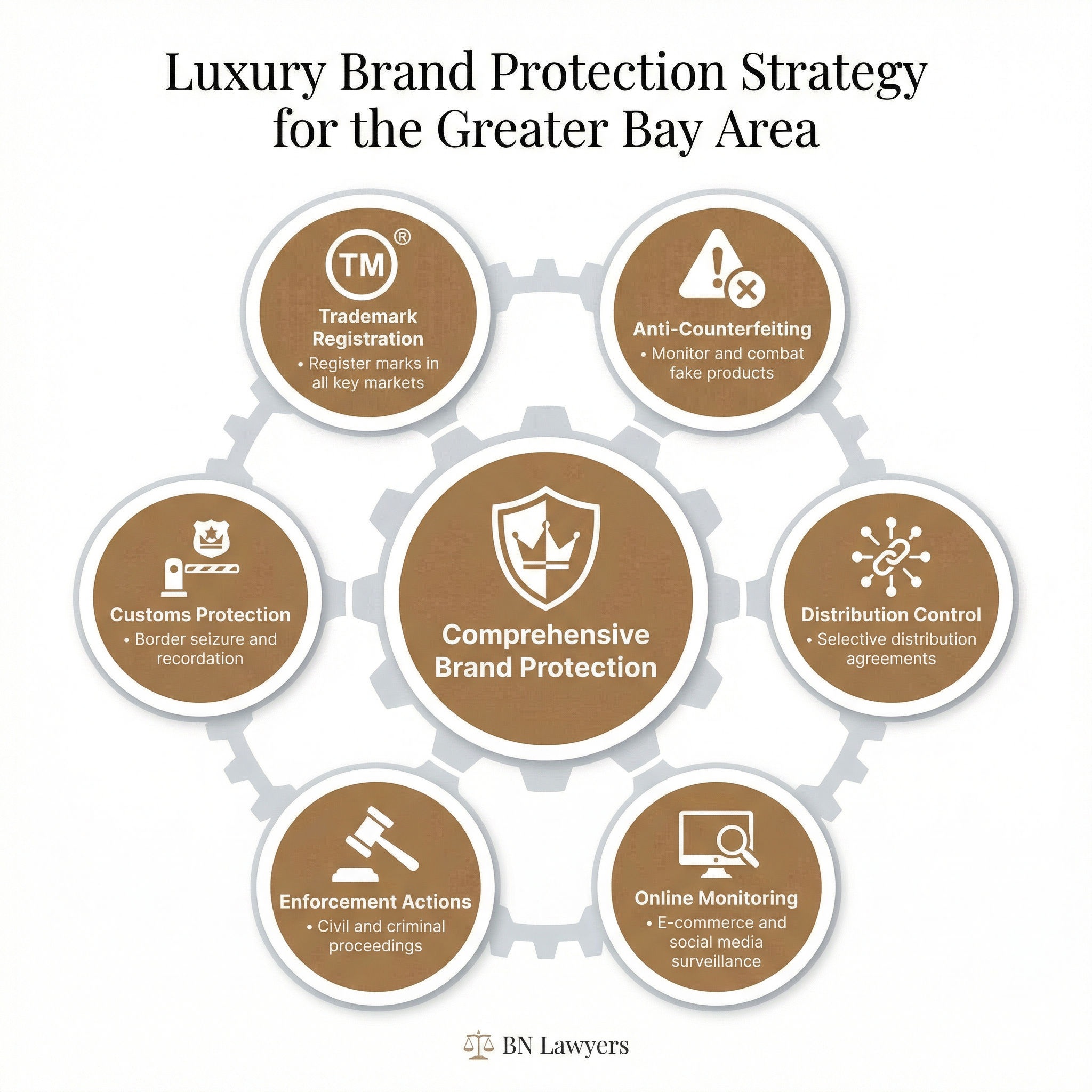
Everything starts with Intellectual Property (IP). Your brand name and logo are your trademarks, and they are the foundation of your legal protection. A comprehensive strategy for luxury brand protection begins with registering your trademarks in every market where you do business. In Macau, this is a critical first step. You cannot rely on a registration from mainland China or Hong Kong; you need a separate registration here.
But it’s not just about trademarks. The unique design of your handbag, the distinctive shape of your perfume bottle, or the intricate pattern of your fabric can all be protected as registered designs. This gives you another powerful weapon to stop copycats in their tracks.
2. Controlling the Experience: Selective Distribution
Luxury is all about the experience. The environment where your products are sold is just as important as the products themselves. This is where a selective distribution system comes in. It’s a legal strategy that allows you to be highly selective about who can sell your products. You can set strict qualitative criteria for your authorized dealers, ensuring that your brand is only available in high-end retail environments that reflect its prestige.
This control extends to the online world. While you can’t completely ban your dealers from selling online, you can require their websites to meet the same high standards of presentation and customer service as their physical stores. It’s all about maintaining a consistent, high-quality brand experience at every touchpoint.
3. The War on Fakes: A Never-Ending Battle
Counterfeiting is the cancer of the luxury industry. It not only costs brands billions in lost sales, but it also erodes their exclusivity and damages their reputation. An effective strategy for anti-counterfeiting Macau requires a proactive, multi-pronged approach.
It starts with a strong IP portfolio and recording your rights with customs, so they can seize fake goods at the border. It involves actively monitoring online marketplaces and social media for infringers. And it means being prepared to take swift and aggressive legal action to shut down counterfeiters and send a clear message that your brand is not to be trifled with.
4. The Global Game: GBA and the Lusophone World
For luxury brands, the world is their market. Macau’s strategic position makes it a launchpad into two of the most exciting consumer markets in the world: the Greater Bay Area (GBA) and the Portuguese-speaking countries. But each of these markets has its own unique legal challenges.
In the GBA, you need a coordinated strategy that accounts for the three different legal systems of Macau, Hong Kong, and mainland China. In the Lusophone world, you need to navigate the national laws of key consumer markets like Brazil and Portugal. A truly effective luxury goods legal service needs to have this global perspective, helping you draft distribution agreements luxury that work across these diverse markets.



5. BN Lawyers: Your Brand’s Guardians
We get it. We understand the unique challenges and opportunities of the luxury sector. We’re not just IP lawyers; we’re brand strategists. We work with some of the world’s most iconic brands to help them protect their valuable IP and execute their commercial strategies in this complex region.
We provide a complete legal service for luxury brands. We can manage your global IP portfolio, design and implement your selective distribution system, and lead your anti-counterfeiting enforcement efforts. We are your partners in protecting the magic and the value of your brand.
1. Why do luxury brands need special legal protection?
Because their value isn't just in the product itself; it's in the brand's story, exclusivity, and reputation. Luxury brand protection is all about safeguarding that intangible value from things that can damage it, like fakes, knock-offs, and having your products sold in the wrong places.
2. What's the most important legal tool for a luxury brand?
Without a doubt, it's your trademark. Your brand name, your logo, even the specific shape of your product – these are all trademarks. A strong trademark portfolio is your number one weapon in the fight against counterfeiters.
3. What is a “selective distribution” system?
It’s a strategy that allows a brand to be very picky about who gets to sell their products. You can set specific criteria for your authorized dealers, ensuring your products are only sold in high-end environments that match your brand’s image. It’s about quality control over the customer experience.
4. Can I stop my authorized dealers from selling my products online?
You can't impose a blanket ban, but you can require their online stores to meet the same high standards as their physical shops. It’s about ensuring the online experience reflects the luxury status of the brand.
5. What is a franchise agreement?
A franchise agreement is a contract that lets someone else (the franchisee) open a store under your brand name. They use your business model and your trademarks, and in return, you get to expand your retail footprint while maintaining control over the brand. It's a very common growth strategy.
6. What does “brand dilution” mean?
It’s when your brand loses its exclusive, high-end image. This can happen if you license your name for cheap products, or if your goods are sold in discount stores. It can seriously damage the value you’ve worked so hard to build.
7. How can I fight back against counterfeit products?
You need a battle plan. First, register your trademarks. Second, record those trademarks with customs so they can seize fakes at the border. Third, use technology to monitor online marketplaces. And fourth, be prepared to take legal action. A key part of this is having a strategy for anti-counterfeiting Macau.
8. What’s a “superfake”?
These are the scary ones. A superfake is a counterfeit that is so well-made it’s almost impossible to tell it apart from the real thing. They are a huge threat because they can fool even sophisticated buyers.
9. Can I protect the actual design of my handbag or watch?
Yes. The unique look of your product can be registered as an industrial design. This stops competitors from making products that look just like yours.
10. What is a “geographical indication” (GI)?
A GI is a sign that identifies a product as originating from a specific place, where a particular quality or reputation is due to that origin. Think “Champagne” or “Swiss Made.” It’s a powerful tool for brands that are closely tied to a specific location.
11. How important is the “Made in” label?
For luxury goods, it’s incredibly important. It’s a mark of quality and authenticity. A misleading “Made in” label isn’t just dishonest; it can be illegal and can seriously damage your brand’s reputation.
12. What are “grey market” goods?
These are genuine products, not fakes, but they are sold through unauthorized channels. For example, someone buys your products in a country where they are cheaper and then imports them to sell in a more expensive market without your permission. It can mess up your pricing and your relationships with your official dealers.
13. Is the law on grey market goods the same everywhere?
No, it’s a legal minefield. It all depends on a concept called “exhaustion of rights,” and every country has its own rules. You need specific legal advice for each market.
14. What is a brand licensing agreement?
It’s when you let another company use your brand name on their products, like fragrances or eyewear, in exchange for a royalty. It can be a great source of revenue, but you need a very tight agreement to control quality and protect your brand.
15. How do I protect my brand on social media?
First, grab your brand name as a username on every platform. Have a clear policy for any influencers you work with. And be vigilant – constantly monitor for fake accounts and people selling counterfeits, and report them immediately.
16. How can technology help protect my brand?
Technology is a huge help. You can use AI to scan the internet for fakes, use blockchain to create a digital passport for your products to prove their authenticity, and even put tiny RFID or NFC tags in your products.
17. What’s a “cease and desist” letter?
It’s a formal letter from a lawyer to someone who is infringing your rights. It tells them to stop what they’re doing immediately, or you’ll sue them. It’s often the first shot across the bow in an enforcement action.
18. Do I need a different strategy for the GBA and the Lusophone markets?
Yes, you do. For the Greater Bay Area, you need a coordinated strategy that recognizes the different legal systems of Macau, Hong Kong, and mainland China. For the Portuguese-speaking countries, you need to understand the national laws of each country. A good luxury goods legal service will help you with this.
19. What about the metaverse?
The metaverse is the new frontier. Brands are already selling digital versions of their products as NFTs. This opens up a whole new world of opportunities, but also a whole new set of legal challenges for protecting your brand in the virtual world.
20. How can BN Lawyers help my luxury brand?
We get it. We understand that a luxury brand is more than just a product. We provide a complete luxury goods legal service, from handling your global trademark portfolio and drafting your distribution agreements luxury, to leading the charge on anti-counterfeiting Macau. We help you protect what makes your brand special, both in the real world and the digital one.